


































By Ayo Arowojolu

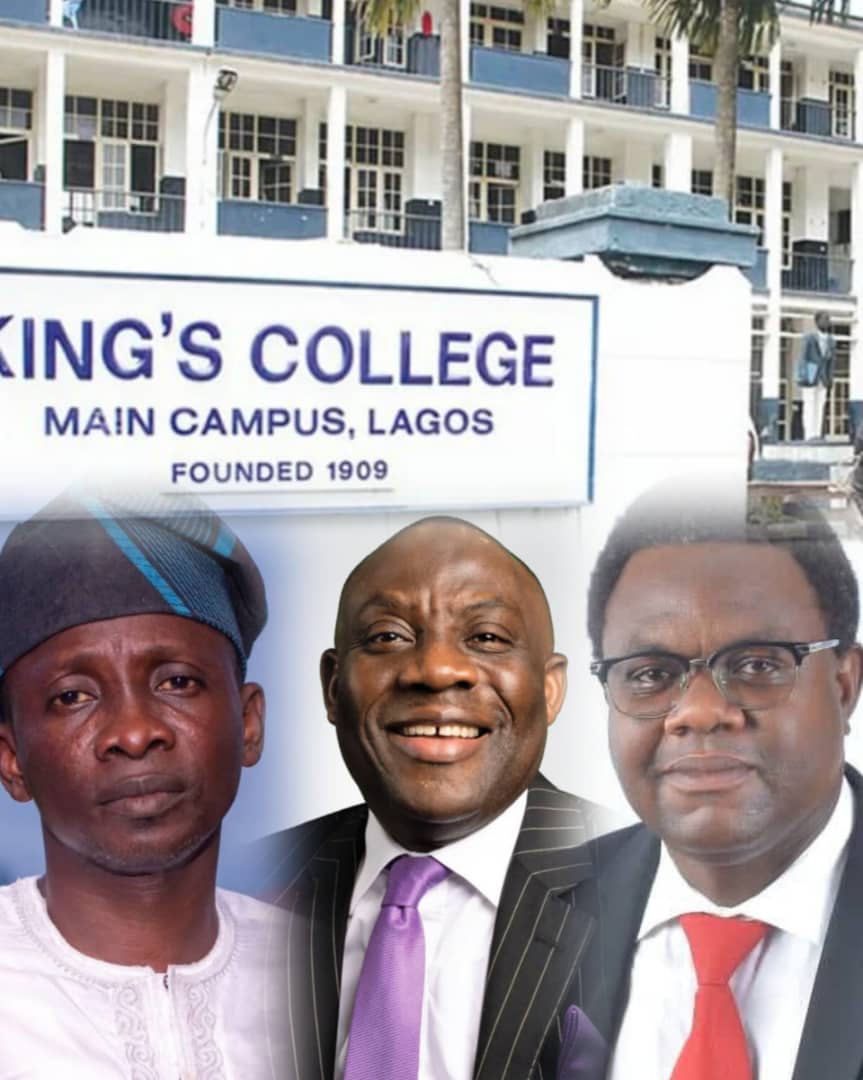
For many Nigerian parents, the argument over the proposed concession of King’s College, Lagos, is no longer simply a dispute about government policy, school management or the future of a historic institution. It has become a deeply personal question.
What happens to a school when the parents whose children sleep in its hostels, sit in its classrooms, eat in its dining halls and return home during holidays are suddenly told that its future may be determined through an arrangement they say they do not fully understand?
And perhaps more importantly: who speaks for the child when the adults begin to disagree? That question lies at the heart of the growing resistance by parents and Parent-Teacher Associations (PTAs) to the Federal Government’s proposed concession of King’s College and the broader conversation around the future management of Nigeria’s 115 Federal Unity Schools.
The controversy took a sharper turn following comments attributed to the Minister of Education, Dr Tunji Alausa, during media engagements on Wednesday, September 16, in which allegations were reportedly made concerning some PTA interests, including claims of exhorbitant payments for admissions and questions over the financing of legal action against the proposed concession.
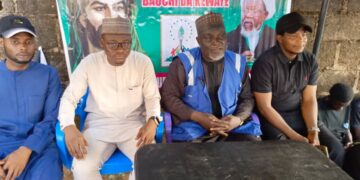
But the parents have pushed back. In a strongly worded rejoinder issued on Thursday, September 17, 2025, PTA leaders from several Federal Unity Schools said they were neither criminals nor enemies of government.
They described themselves instead as parents who have spent years contributing money, time and energy to keep schools functioning and who now fear that a decision capable of altering the character of a national educational institution could be taken without adequate transparency and consultation.
Their message is strikingly simple:
“We are parents defending the educational heritage of our children.” Behind the official language of concession agreements, due process and public assets are thousands of families with a much more immediate concern.
They want to know what kind of school their children will wake up to tomorrow. A school is more than bricks and buildings. To a government document, King’s College may be a public institution requiring rehabilitation, improved management and perhaps private-sector investment.
To generations of Nigerians, however, it represents something considerably more difficult to quantify. It is memory. It is identity. It is the school where someone’s father studied. The institution that shaped a civil servant, doctor, lawyer, engineer, journalist or military officer.
The place from which a young boy left home carrying a small box of clothes and returned years later with a transformed sense of himself. That emotional attachment is part of what makes the current controversy so combustible.
The PTA leaders acknowledge that King’s College needs development. They say they welcome private-sector participation, rehabilitation and better learning environments. Their objection, according to the rejoinder, is not development itself but how development is pursued.
They want Nigerians to know what exactly is being conceded, for how long, under what terms, with what safeguards and with what continuing role for government.
At the centre of their demand is the proposed 35-year arrangement. For parents, 35 years is not an abstract figure. A child entering secondary school today could have children of his or her own before that period expires. That raises an uncomfortable question: what exactly are Nigerians deciding today on behalf of children who have not yet been born?
‘Who owns the school?’
The PTA leaders concede an important point: King’s College does not belong to the PTA. Nor, they stress, does it belong to the Old Boys Association or any individual. It belongs to the Nigerian public. And that, paradoxically, is precisely why they say they feel entitled to question what happens to it.
Their argument is that public ownership should carry public accountability. If the school is a national asset, Nigerians should be able to understand the terms under which its management or use is being transferred or restructured. The parents are therefore asking for the complete concession agreement to be made public, including its duration, financial obligations, performance indicators, termination provisions and protections for students, teachers and the public.
The demand is bigger than King’s College. It touches on a recurring Nigerian dilemma: when government lacks sufficient resources to maintain a public institution, how much of that institution can be handed to private interests without changing its fundamental public character? There may be legitimate arguments on both sides of that question.
But the parents are insisting that the answer cannot be hidden from the people whose children use the institutions.
Then came the ₦20 million question
Perhaps the most emotionally charged part of the dispute concerns the reported allegation that some PTA interests have been involved in collecting as much as ₦20 million for admission into Unity Schools. The PTA leaders have responded with a challenge: produce the evidence. They ask the Ministry to identify the school, the individuals involved, dates of transactions, bank accounts, admission documents and other evidence supporting the allegation.
Their argument is not that wrongdoing should be ignored. Quite the opposite. They say that if anyone collected money illegally for admission, that person should be identified, investigated and prosecuted. But they object to what they regard as the painting of an entire community of parent volunteers with the same brush. It is a distinction worth making.
An allegation against an individual is not necessarily evidence against an institution or an entity or parents. For parents who have volunteered their time to serve on PTAs, being portrayed as participants in a criminal enterprise is understandably deeply offensive.
Who paid for the teacher at the front of your child’s classroom?
There is another, less visible dimension to the controversy. For years, parents in many Unity Schools say they have contributed resources towards teachers, security, maintenance, repairs, sanitation, teaching materials and other urgent needs.
Among the workers supported through such arrangements are PTA-employed teachers. The rejoinder points to reports that more than 3,000 long-serving PTA teachers may be considered for absorption into the Federal Civil Service. The parents welcome the reported move.
But they also ask a question that goes to the heart of the public education crisis: If these teachers have been important enough to keep the schools running for years, who has really been carrying the burden of educating Nigerian children?
Government?Parents? Or both? The answer may well be both. And that is why the parents want the government to publish the number of PTA teachers in each Unity School, their years of service, qualifications, remuneration and the proposed framework for their absorption.
Transparency, they argue, would turn competing claims into verifiable facts.
‘We don’t need to be rented’ The parents have also rejected the reported description of protesters as “rented protesters.”
Their response is perhaps the most human of all. Parents do not need to be paid to worry about their children. A father whose son is in a boarding school does not need a political sponsor to ask who will manage the school.
A mother whose child spends most of the term away from home does not need inducement to ask whether the school will remain affordable, accessible and safe. A teacher does not need to be rented to worry about his or her job.
And an alumnus does not necessarily need political motivation to care about the institution that shaped his life.
The dispute therefore presents government with a delicate challenge: how to distinguish genuine public concern from organised opposition without dismissing every critic as an adversary.
The bigger story is Nigeria’s public school system.
Perhaps, the most important point buried in the rejoinder is that King’s College may only be the immediate flashpoint.
There are 115 Federal Unity Schools. Each has its own buildings, teachers, students, parents, alumni, challenges and history. Each represents a piece of the Nigerian experiment in using education to build national cohesion.
If one school is struggling, the question naturally becomes: what is happening to the others? How much does government spend on each?
How many teachers are available? What is the infrastructure deficit? How much do parents contribute? How many teachers are supported by PTAs?
What are the security challenges? What would concession change? And perhaps the most fundamental question of all: What should a Nigerian public school remain, even when private money enters it?
These are questions that go beyond King’s College.
They concern the very meaning of public education. A battle over buildings—or a battle over legacy?
For the Minister, the government’s stated objective may be improving the quality and sustainability of educational institutions.
For parents, the issue is whether that objective can be achieved without compromising the public character of institutions that generations of Nigerians regard as part of their collective heritage.
Those positions do not necessarily have to be irreconcilable.
Government needs resources.
Schools need rehabilitation.
Teachers need decent conditions.
Students need modern facilities.
Parents want their children to receive quality education.
Old boys want their institutions preserved.
The potential meeting point is therefore not necessarily confrontation, but transparency. Let the agreement be seen. Let the finances be examined. Let the allegations be substantiated or withdrawn. Let the contribution of parents be documented. Let the government’s investment be documented. Let the future of the teachers be clear.
Let the safeguards for students be explicit. And let Nigerians have the opportunity to understand what they are being asked to accept. Because ultimately, the most important people in this controversy have the least powerful voices. They are the boys and girls currently wearing the uniforms. The children in the hostels. The teenagers sitting for examinations.
The young Nigerians who may never know that, in 2026, adults fought over what their schools should become.
For them, the debate is not about a 35-year concession, legal fees or competing press statements. It is about whether the classroom will still be there. Whether the teacher will still be there. Whether the school will remain within reach of ordinary Nigerians.
Whether the institution will still carry the identity their parents entrusted to it.
And whether, decades from now, they will look back and say that the adults of their time protected the foundations of public education—or simply passed the problem to another generation.
That is why the PTA leaders ended their rejoinder with an appeal that cuts through the politics and legal arguments:
“The future of the Nigerian child.” For all the noise surrounding King’s College and the Federal Unity Schools, that may ultimately be the question Nigeria cannot afford to lose sight of.