

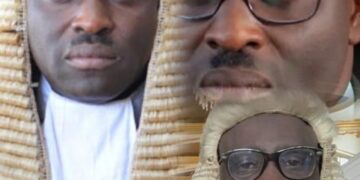
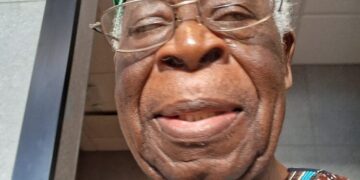


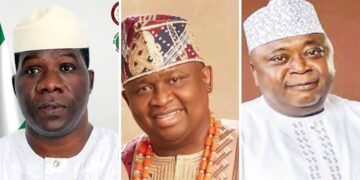
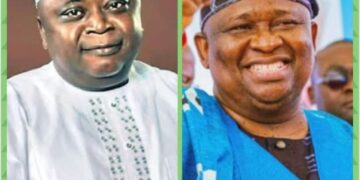
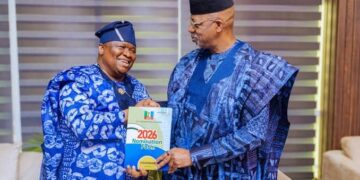
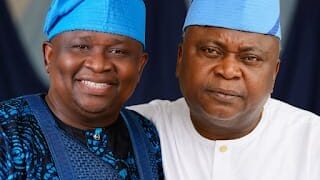

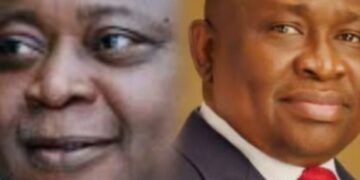

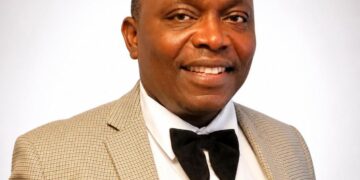

































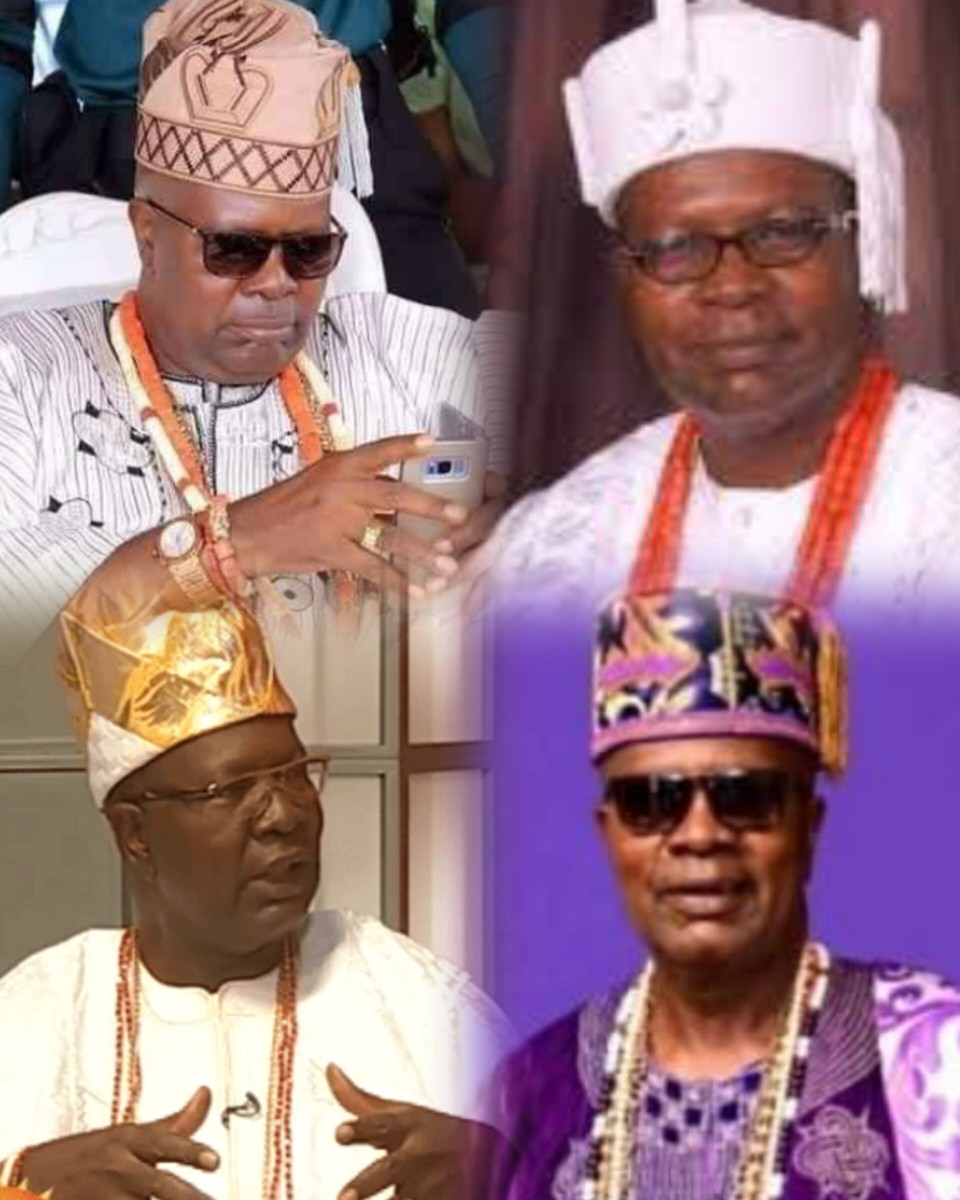
At 70, Ososa’s physician-monarch, Oba Dr. Adetoye Mojeed Alatishe, embodies an unusual fusion of medicine, monarchy, culture and community development

By Ayo Arowojolu
The patient needed a doctor. The community needed a king. In Ososa, somehow, it got both in the same man. That may be the simplest way to begin the extraordinary story of Oba Dr. Adetoye Mojeed Alatishe, the Gbegande of Ososa in Ijebuland, who on Thursday, October 1, 2026, turned 70 amid a week-long celebration of culture, royalty, friendship and service.
There were the familiar trappings of a royal birthday — music, cultural displays, dignitaries, greetings and tributes. But beneath the celebration was a story considerably larger than a birthday.
It was the story of a man who spent years learning how to save lives before learning how to wear a crown; a man who moved from the medical theatre to the political arena and eventually to the palace, without completely surrendering the first calling that shaped his life.
Even as Kabiyesi, he has remained, in an unusual way, Dr Alatishe. And that is what makes his 70th birthday worth remembering.
There was something almost symbolic about the date. October 1 is Nigeria’s Independence Day. For Oba Alatishe, it is also personal independence day — the anniversary of his birth in 1956.
Thus, while the nation celebrated 66 years of independence, Ososa celebrated seven decades of one man’s journey through medicine, public administration, traditional leadership and community service.
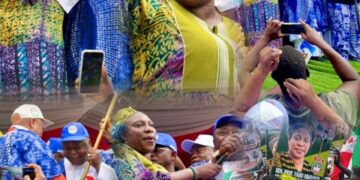
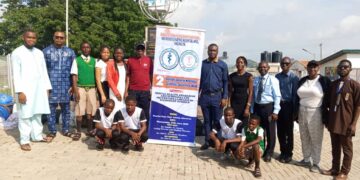
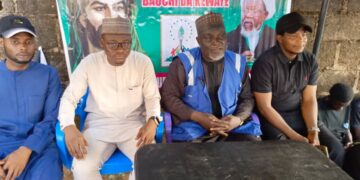
The birthday celebration, which stretched across the week, brought together traditional music, cultural performances and an assortment of eminent personalities and public figures.
But the real celebration was not the ceremony. It was the journey. Before the crown, there was the white coat. Long before palace protocol, royal greetings and the familiar salutation of “Kabiyesi”, there was a young man from Ijebuland who wanted to become a doctor.
Born into the Balogun Alatishe family of the Ogunroyega ruling house of Ososa, the future monarch grew up largely in Ijebu-Ode. His early education took him through Christ Church School, Porogun Alapo, Ijebu-Ode, Ijebu Muslim College and Adeola Odutola College.
Curiously, there was already a small theatrical rehearsal for his eventual destiny. As a student, Alatishe participated in drama and often played the role of an oba. Nobody could have known then that the stage crown would eventually be replaced by a real one.
His real ambition, however, was Medicine.
In 1975, he left Nigeria on a Federal Government scholarship for the First Moscow Medical Institute in the former Soviet Union. It was a remarkable destination for a young Nigerian aspiring to become a doctor. He did more than study Medicine there.
He emerged as president of the Nigeria Students Union in Moscow and subsequently president of the African Medical Students’ Organisation. He graduated as a medical doctor in 1982.
The young graduate returned home and began the career that would eventually become one of the defining pillars of his life.
The doctor who refused to leave the village
After working in medical institutions in Ibadan and Ijebu-Ode, Alatishe established the Alatishe Clinic in Ijebu-Ode in 1986. His medical practice became closely associated with accessibility and community service. But perhaps the most unusual chapter was yet to come.
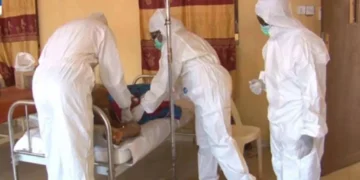
When he became Gbegande of Ososa, he did not behave like a man who had retired from medicine simply because he had acquired a crown. He carried his medical calling into the palace. Even as a monarch, he continued to attend to patients and intervene in complicated cases.
He has recounted instances in which he was called upon to manage difficult obstetric emergencies, including retained placenta and retained second twin cases, sometimes taking patients to the theatre himself.
Think about the unusual picture this creates. A patient arrives in distress. The community calls the king. The king comes — but not merely as king. He comes as a doctor. That is perhaps one of the most distinctive features of the Alatishe story.
From operating theatre to traditional palace
His career before the throne was itself a preparation for the broader responsibilities that awaited him. Between 2004 and 2007, he served as chairman of Ijebu-Ode Local Government.
He subsequently occupied senior positions in the primary healthcare system of Ogun State, including becoming the pioneer Executive Secretary of the Ogun State Primary Health Care Development Agency. By then, he had experienced leadership from several directions. He understood the patient. He understood the doctor. He understood the administrator. And he understood government.
When the traditional institution eventually called, he brought all those experiences with him. He ascended the throne of Ososa in 2010. The result was an unconventional brand of kingship.
The palace became a development centre
For some monarchs, development means receiving visitors and attending government functions. For Alatishe, it appears to mean getting things done.
His reign has been associated with efforts to improve healthcare, infrastructure, education and the general welfare of Ososa. Healthcare naturally became one of his strongest areas of intervention.
The local health centre was upgraded. Accommodation was provided for medical personnel. Efforts were made to attract doctors to the community, including through relationships involving the National Youth Service Corps. The significance of such intervention cannot be overstated in a rural community.
A health centre without doctors is little more than a building. A doctor without equipment is similarly limited. And a rural community without either is often condemned to travelling considerable distances for basic medical care.
The monarch understood this from both sides — as a king responsible for his people and as a physician who knew what happens when healthcare arrives too late.
Perhaps one of the more revealing aspects of his approach is the way he has dealt with traditional healthcare. Instead of pretending that traditional birth attendants do not exist, he has sought ways of improving their practices through training, hygiene and safer procedures. It is a distinctly pragmatic approach.
The reality of rural Nigeria is that people will continue to use systems they trust and can afford. The challenge, therefore, is not always to destroy traditional systems but to reduce the dangers associated with them and create a bridge to modern medicine.
That philosophy has reportedly contributed to improved maternal healthcare in Ososa. It is also a reflection of the monarch’s larger philosophy: modernisation should not necessarily mean cultural annihilation.
The king and the ghost of Ogunde
There is another reason Ososa is special. The name of the community is inseparable from one of Nigeria’s greatest theatre pioneers, Hubert Ogunde. Ogunde transformed Nigerian theatre and left behind a cultural legacy that continues to influence the performing arts.
And Oba Alatishe had a personal connection with him. The monarch served as Ogunde’s personal physician during the final years of the theatre legend’s life. That relationship has given the king a particularly personal stake in preserving the cultural history of Ososa. The dream goes beyond merely keeping an old house or monument.
There has been a continuing vision of transforming Ososa into a cultural and tourism destination, including the development of an Ogunde museum/film village concept and other recreational projects. It is an idea that could potentially change the economic fortunes of the community.
Imagine a rural Nigerian town where medicine, theatre, history, tourism and traditional culture converge. That is the Ososa that the physician-king appears to envision.
The crown as a development instrument
Perhaps the most important lesson from Alatishe’s reign is his apparent interpretation of traditional authority. He has previously described the traditional ruler as a servant of the people. That philosophy is not merely rhetorical.
In communities where government presence can be intermittent, the monarch often becomes the first person residents approach when a road collapses, electricity fails, a pregnant woman needs emergency help, a school needs support or an outside agency needs to be persuaded to intervene.
The king becomes, in effect, a one-man pressure group.
Alatishe has embraced that role. His relationships with government officials, professionals, politicians, philanthropists and members of the Ososa diaspora have been deployed in pursuit of community projects. It is an old institution performing a modern function.
And then there is education. The future of Ososa cannot depend entirely on what happened in the past. The monarch appears to understand that.
His community development interests have therefore extended into education, with support for teachers, educational initiatives and plans aimed at creating opportunities for younger people. The logic is simple. A community may survive without a magnificent palace. It cannot thrive indefinitely without educated young people.
The challenge for a rural community is to prevent its brightest young people from becoming completely disconnected from their ancestral home. Education, therefore, becomes another form of community preservation.
Seventy — but not retired
Perhaps the most interesting thing about Oba Alatishe at 70 is that the number does not appear to have brought the usual sense of closure. There is still the healthcare agenda. There is still the cultural agenda. There is still the Ogunde legacy. There are infrastructure challenges.
There are educational aspirations. There is the larger question of how Ososa can turn its history into economic opportunity. And there remains the unfinished business of demonstrating what a modern traditional institution can accomplish.
His story consequently does not fit neatly into the familiar template of a royal birthday feature. It is not simply about an old man looking back. It is about a septuagenarian monarch still looking forward.
A life of several identities
Perhaps the best way to understand Oba Alatishe is to remove the titles one after another.
Remove “Kabiyesi”. What remains? A doctor. Remove “doctor”. What remains? A community organiser. Remove “community leader”. What remains? A man shaped by education, public service, culture and an unusually strong attachment to Ososa. That may be the enduring story of his 70 years.
He has occupied different positions, but the central thread has remained remarkably consistent: service. As a medical doctor, he served patients. As a local government Chairman, he served constituents. As a health administrator, he served communities. As a monarch, he serves his people. The uniforms have changed, though. The responsibilities have expanded. The calling has remained.
The Independence Day king
So, on October 1, as Nigeria celebrated another anniversary of independence, Ososa celebrated its own landmark. Seventy years of Adetoye Mojeed Alatishe.
Seventy years since a boy was born into a royal family without necessarily knowing that one day he would inherit its crown.
Seventy years since the journey began.
A journey that passed through Ijebu-Ode. Through Moscow. Through medical wards and operating theatres. Through local government. Through public healthcare administration. And finally through the palace gates of Ososa.
Perhaps that is why the most appropriate description of Oba Alatishe is not simply physician-king. He is something more unusual: a doctor who became king without giving up the doctor in him.
And at 70, the Gbegande of Ososa appears to have discovered that the two callings were never really in conflict. Both demanded the same thing. Service!