






























































News

Death Be Not Proud: Publisher Dotun Oladipo and the Tolling Bell
By Max Amuchie | The Sunday Stew At just 56, Dotun Oladipo has left us far too soon. John Donne, the 17th-century English poet and cleric, wrote words more than four centuries ago that seem almost written for a moment such as this: “No man is an island, entire of itself; every man is a piece of the continent, a part of the main; and if a clod be washed away by the sea, Europe is the less, as well as if a promontory were, as well as if a manor of thy friends or of thine own were; any man’s death diminishes me, because I am involved in mankind; and therefore never send to know for whom the bell tolls; it tolls for thee.” Those words have stayed with me since I first encountered them. I have returned to them at moments of profound loss, including the tragedy of the Bellview Airlines crash in October 2005. But I never imagined that I would one day find myself returning to them to make sense of the death of Dotun Oladipo. For whom, indeed, does the bell toll? It tolls for Dotun. But it also tolls for all of us. It tolls for the journalists who worked with him, for the publishers he mentored, for the members of the Guild of Corporate Online Publishers (GOCOP) whom he served and strengthened, for the readers who encountered his journalism, and for the many people whose lives he touched in ways that perhaps became fully apparent only after his death. It tolls for me too. The first time I invoked the title of Donne’s famous meditation, ‘Death Be Not Proud’, was in October 2005, in a reflective article on the October 22, 2005, Bellview Airlines Boeing 737-200 crash. On Sunday, October 23, my family was about driving out to go to church when a call came from Eniola Bello, then Editor of ThisDay. Bellview Airlines had crashed the previous day, Saturday, and I was needed immediately in the office to lead the reportorial team to the crash site in a remote village in Ogun State. I was Features Editor at the time and, as is typical of journalism, like military service, one must obey the editor’s order. I got to the ThisDay office in Apapa, Lagos that morning and the Chairman, Nduka Obaigbena, had made his personal car available for the trip. We drove to the forest in Lisa village in Ifo Local Government Area of Ogun State, where the crashed aircraft had been buried deep in the earth. There was hardly any visible trace of the aircraft. No recognisable piece of it could be seen, except for the little smoke rising from the earth and the tree branches that had been cut or shattered by the impact. All 111 passengers and six crew members perished. There were many responders — the Red Cross and the Ogun State Government team led by the then Commissioner for Health, Dr Iyabo Obasanjo-Bello, among them. The atmosphere was sombre. Everyone could feel the enormity of the calamity, the scale of the human tragedy. Journalists are trained to be emotionally detached from the stories they cover. I managed to apply that principle, but I also had to write a reflective piece on a tragedy whose scale was almost unimaginable. In writing that article, I reached for John Donne’s ‘Meditation XVII’, from his 1624 Devotions upon Emergent Occasions, the meditation that inspired the title of Ernest Hemingway’s 1940 novel, For Whom the Bell Tolls. I had first written about Donne’s famous meditation some five years earlier, following the Kenya Airways Flight 431 crash of January 30, 2000, which I was assigned to cover at the Murtala Muhammed Airport, Lagos, where relations of the crash victims had besieged the airline, desperately seeking information about their loved ones. The plane, carrying almost exclusively Nigerian passengers, had crashed into the Atlantic Ocean shortly after take-off from the Félix Houphouët-Boigny International Airport, Abidjan, Côte d’Ivoire. ...
Read more
Next Sunday: Prof Toyin Falola Leads Search for Africa’s Escape Route from Underdevelopment
Eminent historian, author and internationally acclaimed scholar, Prof Toyin Falola will on Sunday September 13, 2026 take Africa’s development paradox...
Read more
Ex-Nigerian High Commissioner to Britain, Sarafa Isola Celebrates Alhaja Islamia Iromini at 75
Ambassador Sarafa Tunji Isola has celebrated Alhaja Islamia Iromini, on her 75th birthday, describing her as an exceptional woman whose...
Read more
Echoes of Trauma: The Cost of Never Saying NO! By Lillian Okenwa
Sometimes, the people who complain most about what we stopped giving are the very people we spent years teaching to...
Read more
“Calling Nigerian Graduates Unemployable Is National Demarketing” Farounbi, Mande Warn
Nigeria — "Stop saying that Nigerian graduates are not employable." That was the emphatic position of Ambassador Dr. Yemi Farounbi,...
Read more
Erelu Tunwase Bombs Nigerian Bar, Says VDM Controversy Exposes Gulf Between Bar, Bench, Citizens
By Ayo Arowojolu The raging controversy over the invitation of social media activist, Martins Vincent Otse, popularly known as VeryDarkMan,...
Read more
Eight Things That Can Hinder Answered Prayers, Cleric Warns Nigerians
By Ayo Arowojolu A cleric, Venerable Olukunle Aremu Fajobi, has urged Christians to examine their spiritual lives and remove attitudes...
Read more
Iyabo Obasanjo Goes All Out for Ogun Central, Takes Grassroots Mobilisation to Hinterlands
By Ayo Arowojolu For former Ogun State Commissioner for Health and one-time Senator representing Ogun Central, Prof Iyabo Obasanjo, one...
Read more
Hunye’s brimming bag of comedies: Appointing ‘running mate’ for non-existent ticket
By Segun Olatunji Ogun State's theatre of politics just staged its latest comedy of errors, and it deserves a standing...
Read more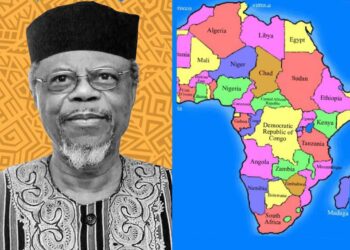
Can Africa Break Free from Underdevelopment? Prof Falola Leads Crucial Boiling Point Debate Sept 13
One of Africa's most eminent historians, scholars and public intellectuals, Prof Toyin Falola, is set to lead what promises to...
Read more







Recent News

Boiling Point is an online newspaper that has bias for reporting items of news that principally cut across politics, economy, general interests and public finance management/administration. Boiling Point holds dearly the journalism tenets of objectivity, fairness, balance and truth in reporting the news.