




























































By Ayo Arowojolu

The Ogun border corridor is becoming an increasingly contested frontline in the government’s battle against both narcotics trafficking and the smuggling of goods capable of undermining domestic production.
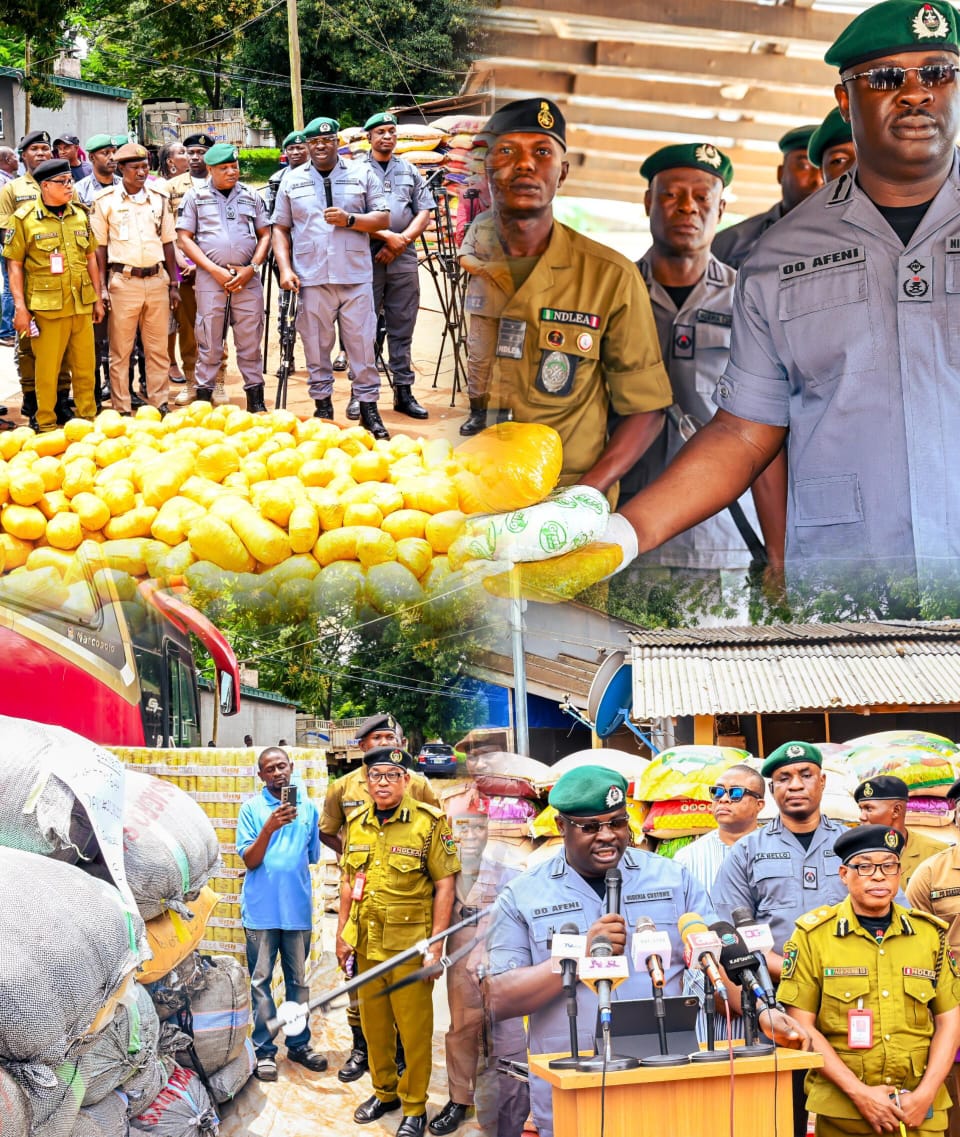
The Nigeria Customs Service, Ogun I Area Command, has intercepted 6,035 parcels of suspected “Ghana Loud” alongside 2,339 bags of foreign parboiled rice and other prohibited goods with a combined duty-paid value of N3.57 billion.
The seizures, made between June 24 and August 13, 2026, formed part of what the Command described as an intensified crackdown on smuggling networks operating along the Ogun border corridors.
Acting Customs Area Controller, Deputy Comptroller O.O. Afenifere, disclosed this on Thursday at a press briefing at the Command’s headquarters in Idiroko, where the seized items were displayed before their formal handover to the National Drug Law Enforcement Agency (NDLEA), Idiroko Special Command.
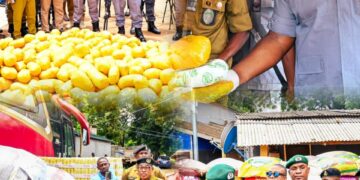
Among the items handed over for further investigation were 6,035 parcels of suspected cannabis products identified by the Command as Ghana Loud/Indica.
The seizure also included 70 cartons of basmati rice, 30 bags of foreign sugar, 11,450 litres of Premium Motor Spirit (PMS) in kegs, 1,750 litres of PMS in drums, 30 kegs of diesel, 100 bags of fertilizer, 67 bales of second-hand clothing, cosmetics, hair accessories, drinks and other restricted goods.
Other seized items included 2,674 pieces of new shorts and trousers, 3,760 pieces of new tops, 85 fire extinguishers, 53 packages of oats, 127 new purses and three packages of surgical shoes.
The total duty-paid value of the seizures was put at N3,574,435,248.08.
Afenifere said the growing sophistication of smugglers, particularly those involved in narcotics trafficking, had forced the Command to combine intelligence gathering, technology and inter-agency cooperation in its border enforcement operations.
He said smugglers had resorted to increasingly sophisticated concealment methods, but insisted that Customs intelligence networks and frontline personnel had continued to disrupt their supply chains.
“We will continue to put them on their toes, hit them very hard by making Ogun I Command hostile for them,” the Acting Controller said.
The Customs boss revealed that the latest drug interception was part of a much larger enforcement campaign, disclosing that the Ogun I Command had handed over 32,412 parcels of hard drugs and 92 sacks of raw cannabis sativa to the NDLEA Idiroko Special Command since January 2026.
He formally handed over the narcotics displayed at Thursday’s briefing to the NDLEA for further investigation and prosecution in accordance with established procedures.
According to him, the scale of narcotics trafficking through the border corridor makes inter-agency collaboration indispensable.
He described the fight against drug trafficking as a “relay race”, stressing that no single security agency could secure the nation’s borders alone.
The Customs chief also warned that the proliferation of high-potency cannabis products posed serious social and security consequences, alleging that proceeds from the illicit trade could provide funding for criminal networks and other cross-border crimes.
‘Smuggling is economic sabotage’
Beyond narcotics, the Command placed considerable emphasis on the economic implications of the seizure of foreign rice and other restricted imports.
Afenifere argued that the continued smuggling of foreign rice undermined investments in Nigeria’s agricultural sector, weakened local mills and deprived Nigerian farmers of a viable market.
He rejected the characterization of smuggling as merely a means of survival, describing it instead as “economic sabotage” capable of undermining national efforts towards food self-sufficiency.
“When foreign rice is smuggled into our markets, it undermines our local farmers and agricultural investors,” he said, noting that billions of naira had been invested in the drive towards greater domestic food production.
He urged Nigerians to support locally produced agricultural products, particularly rice, arguing that consumer choices had implications for employment, investment and food security.
Meanwhile, the Command disclosed that it generated N90,066,164 in July from baggage assessments, auctions of perishable goods, PMS and other charges.
On exports, the Command recorded a total export volume of 10,110 metric tonnes, with a Free On Board (FOB) value of N2,594,078,654.
The major commodities driving the export figures, according to the Command, included white talc, crushed thermal coal and compressed natural gas (CNG).
Afenifere stressed that the Customs Service should not be viewed solely as a revenue-generating agency, describing it as a frontline institution for the protection of Nigeria’s domestic economy.
He warned smugglers and criminal syndicates using Ogun as a transit corridor that the Command would continue to seize illicit consignments, impound vehicles and prosecute offenders.
The Acting Controller appealed to traditional rulers, youth leaders and residents of border communities to cooperate with security agencies by reporting suspicious activities.
He also urged members of the public to distinguish legitimate cross-border commerce from prohibited trade, saying media reports should be based on proper investigation so that legitimate traders were not wrongly portrayed as smugglers.
He commended officers of the Ogun I Command for their commitment to border enforcement and expressed appreciation to the Comptroller-General of Customs, Bashir Adewale Adeniyi, for what he described as sustained operational support.