


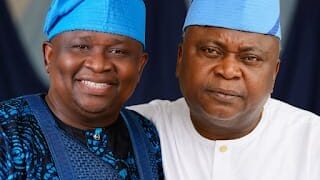


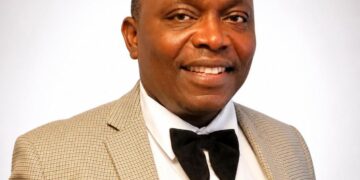






































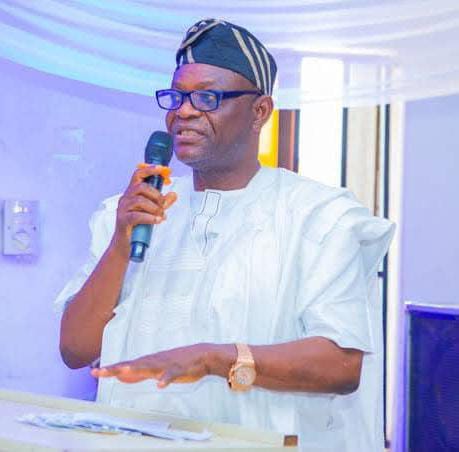
Oloriewe Raheem Adedoyin, a veteran journalist and top member of the Executive Board of the International Press Institute (IPI), has charged Nigerian journalists to strengthen democratic accountability by exposing government failures, reporting public officials’ achievements fairly and resisting the temptation to become instruments of propaganda.

Adedoyin gave the charge on Saturday while delivering the keynote address at the virtual inauguration of the Kwara State Chapter of the Association of Communication Scholars and Professionals of Nigeria (ACSPN).
Speaking on the theme, “Journalism, Communication and the Imperatives of Good Governance,” he argued that the country’s democratic future depended significantly on the ability of the media to hold political leaders accountable while maintaining professional independence and responsibility.
His intervention comes as Nigeria approaches the 2027 general elections, a period expected to intensify political competition, public scrutiny of government policies and the circulation of competing narratives about the country’s political and economic direction.
According to him, journalism must neither become an institutional opponent of government nor serve as a public relations machinery for those in power.
He maintained that the media’s primary responsibility was to the public interest, requiring journalists to expose misconduct and failures wherever they occurred while giving appropriate recognition to policies and initiatives that benefited the people.
“Where government performs well, our reportage must reflect this, but where government fails, journalism must also expose the failure of the state,” he said.
The veteran journalist noted that the Nigerian Constitution had assigned the media a distinctive responsibility in the country’s democratic architecture.
Citing Section 22 of the 1999 Constitution, as amended, he said the provision mandated the press, radio, television and other mass media to uphold the fundamental objectives of state policy and ensure the accountability of government to the people.
He described this constitutional responsibility as a major obligation that required journalists to defend the public interest through independent, fearless and professionally responsible reporting.
Adedoyin stressed that the media’s watchdog role was particularly important in a political environment where public officials might be inclined to conceal wrongdoing or avoid scrutiny.
However, he cautioned that investigative and critical journalism should not be confused with hostility towards government, insisting that professional reporting must be guided by facts, fairness and the broader interests of society.
He said only a free and responsible press could sustainably strengthen democratic institutions and help citizens make informed decisions about their leaders.
Beyond journalism’s watchdog function, Adedoyin identified effective communication as an indispensable instrument of good governance, warning that even well-designed government policies could lose public confidence when authorities failed to explain their purpose, implementation and implications for citizens.
He argued that governance involved more than the formulation of policies, execution of projects and announcement of reforms, stressing that citizens needed to understand how government decisions affected their everyday lives.
According to him, a communication gap between government and the governed could create fertile ground for rumours, misinformation and fake news.
“It could, therefore, be easy for government to enunciate excellent policies, launch amazing public infrastructure and introduce far-reaching reforms, but if citizens do not understand what government is doing, why it is doing it and how those policies affect their lives, a disconnect is already established,” he said.
The communication scholar argued that effective governance required a two-way process in which authorities explained their decisions while citizens had meaningful opportunities to communicate their needs, concerns and expectations.
He described communication as the bridge between the exercise of political authority and the delivery of public good, adding that the media played a critical role in connecting government policies with public understanding.
Drawing on the ideas of American philosopher John Dewey, Adedoyin said communication was fundamental to the existence and continuity of society because it facilitated the transmission of knowledge, experience, values and meaning across generations.
He explained that the same principle applied to governance, where public policies, institutional decisions and government priorities needed to be communicated clearly to the people they were designed to serve.
Adedoyin warned that when public communication lacked credibility, it could degenerate into propaganda, just as journalism without professional responsibility could become mere noise.
He consequently called for a governance framework in which credible communication, responsible journalism and public accountability reinforced one another.
The inauguration brought together communication scholars and media professionals to strengthen professional collaboration and expand the association’s presence in Kwara State.
The National President of ACSPN, Prof. Rotimi Williams Olatunji, and the association’s Vice-President for the North-Central zone, Prof. A.L. Azeez, were among the leaders featured at the event.
The inauguration was designed to build a stronger community of communication scholars and professionals in the state, providing a platform for intellectual engagement, professional development and collaboration between academia and the media industry.
Adedoyin congratulated the organisers, describing the establishment of the chapter as a worthwhile initiative for bringing together scholars and practitioners within the communication fraternity.
He urged stakeholders to preserve the relationship between journalism, communication and governance, arguing that the three forces were inseparable in shaping society and sustaining democratic life.
He said the ultimate challenge was to ensure that journalism remained responsible, communication retained its credibility and governance remained accountable to the citizens in whose name political authority was exercised.