



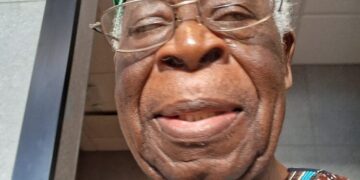


























































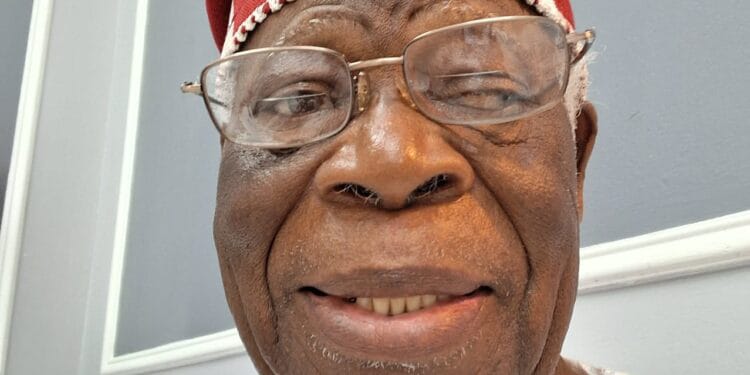
Forgiveness is often mistaken for weakness, surrender or an admission that an offence does not matter. But according to Venerable Olukunle Aremu Fajobi, forgiveness is none of these; rather, it is a Christian discipline that frees the offended from the enduring grip of anger, bitterness and emotional pain.

Fajobi, in his Sunday sermon delivered on October 4, 2026, warned Christians against allowing offences committed against them to become permanent burdens that shape their lives, relationships and spiritual walk.
Speaking on the theme, “The Importance of Forgiveness,” with Matthew 6:14–15 as his anchor text, the cleric said forgiveness was not merely a desirable virtue but a direct Christian responsibility, one that Jesus Christ Himself placed at the heart of the believer’s relationship with God.
The passage declares: “For if you forgive other people when they sin against you, your heavenly Father will also forgive you. But if you do not forgive others their sins, your Father will not forgive your sins.”
For Fajobi, the words represent a serious spiritual warning in a world where broken relationships, family disputes, marital conflicts, friendship betrayals and communal disagreements are increasingly common.
The offence that refuses to die
According to the cleric, human beings cannot live without experiencing offences because no relationship is completely immune from misunderstanding, disappointment or wrongdoing.
A husband can hurt his wife. A wife can hurt her husband. Parents can offend their children and children can hurt their parents. Friends can betray one another, while even fellow Christians can become sources of pain.
The critical issue, he argued, is therefore not whether people will offend one another but how individuals choose to respond when they are offended.
Fajobi observed that some people spend years carrying offences committed against them, sometimes for five, ten, 20 or even 30 years.
In some cases, the person responsible for the offence may have forgotten the incident, moved on with life or may not even realise the depth of the pain caused, while the offended person continues to relive the experience.
That, he said, is one of the tragedies of unforgiveness.
The person who caused the wound may have physically left the situation, but the offended person continues to carry the emotional consequences.
“Do not allow somebody else’s offence to control your life for years,” was the underlying message of the sermon.
Forgiveness as a command, not a convenience
Drawing from Colossians 3:13, Fajobi said the Bible does not present forgiveness as something Christians should practise only when they feel emotionally ready or when the offender has first apologised.
“Forgive as the Lord forgave you,” the Scripture says.
The cleric explained that the foundation of Christian forgiveness is the recognition that every believer is himself or herself a recipient of divine mercy.
Nobody, he noted, can claim to have lived a life completely free from error.
Human beings make mistakes, deliberately or unintentionally, and therefore depend on God’s mercy.
The Christian obligation is consequently to extend to others some of the mercy that God has continually demonstrated.
Forgiveness, in this sense, becomes more than a response to another person’s apology. It becomes a reflection of the character of God in the life of the believer.
When bitterness becomes a prison
One of the strongest messages in the sermon was that unforgiveness can become a form of self-imprisonment.
According to Fajobi, refusing to forgive can cause an individual to repeatedly revisit the same painful experience, rekindling anger long after the original incident has ended.
Such a person may become increasingly restless, suspicious or emotionally withdrawn, with the consequences eventually spilling into other relationships.
The danger is that an offence that happened once can be repeatedly experienced in the mind.
The wound may therefore remain fresh even when the event itself is years old.
Forgiveness, he argued, provides a way of breaking that cycle.
It enables the offended person to acknowledge that the wrongdoing was real and painful without allowing the wrongdoing to determine the direction of the rest of his or her life.
In that sense, forgiveness is not necessarily a gift to the offender alone. It is also liberation for the victim of the offence.
Jesus and the radical demand for repeated forgiveness
Fajobi also drew attention to Jesus’ response to Peter’s question about how many times a believer should forgive someone who repeatedly commits an offence.
Peter suggested seven times. Jesus responded with the much larger figure rendered in some translations as “seventy-seven times” and in others as “seventy times seven.”
The point, Fajobi explained, was not for Christians to keep a mathematical record of offences until they reached 77 or 490 and then declare forgiveness exhausted.
Rather, Christ was teaching a lifestyle of forgiveness. The Christian should cultivate a heart that is not controlled by resentment, hatred or the desire for revenge.
But the cleric was careful to distinguish forgiveness from foolishness.
Repeated forgiveness, he stressed, does not mean giving an offender unlimited permission to continue abusing or harming another person.
Forgiveness is not permission for abuse
This distinction is particularly important in understanding the sermon.
Fajobi cautioned against interpreting forgiveness as an instruction to remain in dangerous or abusive circumstances.
To forgive does not mean that wrongdoing becomes right. It does not mean pretending that an offence never occurred.
It does not eliminate consequences for serious wrongdoing, nor does it prevent the pursuit of justice where justice is necessary.
There may also be situations requiring boundaries, separation and other forms of protection.
A Christian, he argued, can forgive while still exercising wisdom. The heart can be released from hatred without the individual abandoning common sense.
This, perhaps, is one of the most practical dimensions of the sermon: forgiveness does not require the offended person to deny reality.
Rather, it requires the person to refuse to become permanently consumed by what happened.
The prayer-life connection
Fajobi further linked forgiveness with the Christian’s prayer life, drawing from Mark 11:25, where Jesus instructed His followers to forgive when they stand praying.
The implication, he said, is that Christians cannot deliberately nurture hatred and simultaneously claim to be enjoying an unhindered relationship with God.
This calls for regular self-examination. Who is the person whose name immediately provokes anger? Whose memory still produces resentment? What old disagreement continues to occupy the mind? What family dispute has remained unresolved for years?
For Fajobi, these are not merely psychological questions. They are also spiritual questions.
He urged believers to take such wounds before God and ask for the grace necessary to forgive.
The other side of forgiveness: saying “I am sorry”
The sermon did not portray forgiveness as something only offenders must receive.
Fajobi reminded Christians that they must also be humble enough to recognise when they themselves have caused pain.
He warned against the tendency to remember vividly what others have done to us while conveniently forgetting what we may have done to them.
Christian maturity, he said, requires the humility to admit wrongdoing.
Sometimes, he observed, the words “I am sorry” can accomplish what prolonged arguments, explanations and accusations cannot.
Pride can destroy a relationship, while humility can create a pathway towards reconciliation.
The willingness to ask for forgiveness, therefore, is as important as the willingness to grant it.
The ultimate model: Christ on the cross
For Fajobi, the most powerful example of forgiveness remains Jesus Christ Himself.
He referred to Luke 23:34, where Jesus, even in the midst of crucifixion, prayed for those responsible for His suffering.
“Father, forgive them,” Christ prayed. The significance of the example, Fajobi noted, is that Jesus’ prayer came in circumstances of extreme pain.
Forgiveness, therefore, cannot always depend on how the offended person feels.
There are wounds that are too deep for ordinary human strength to overcome. There are betrayals that make forgiveness appear impossible.
There are experiences whose memories do not disappear simply because someone says they should.
But the Christian faith teaches that divine grace can enable people to do what their natural strength may find difficult.
If God commands forgiveness, Fajobi stressed, He also provides the grace required to obey.
Healing homes, churches and communities
The consequences of forgiveness extend beyond individual spiritual wellbeing.
According to the sermon, a forgiving culture can help protect marriages, families, churches and communities from the destructive effects of prolonged resentment.
Many conflicts that appear complicated may have started with a relatively small offence that was never addressed.
A misunderstanding becomes resentment. Resentment becomes estrangement.
Estrangement becomes bitterness. And bitterness eventually becomes a permanent breakdown in relationship.
The cleric therefore urged Christians not to allow unresolved offences to destroy relationships that could still be healed.
He called for a deliberate culture of forgiveness, apology, humility, reconciliation and peace.
A message that goes beyond the church
Although rooted firmly in Christian teaching, the sermon carries a wider social message in a country where personal, political, communal and institutional disagreements frequently become prolonged battles.
Forgiveness does not require people to abandon accountability. Rather, it challenges them to pursue justice without allowing hatred to become the permanent foundation of their lives.
That distinction is particularly important in public life. A society cannot function effectively if every disagreement becomes an excuse for revenge and every political contest produces permanent hostility.
Forgiveness does not erase accountability, but it can prevent accountability from degenerating into vengeance.