



























































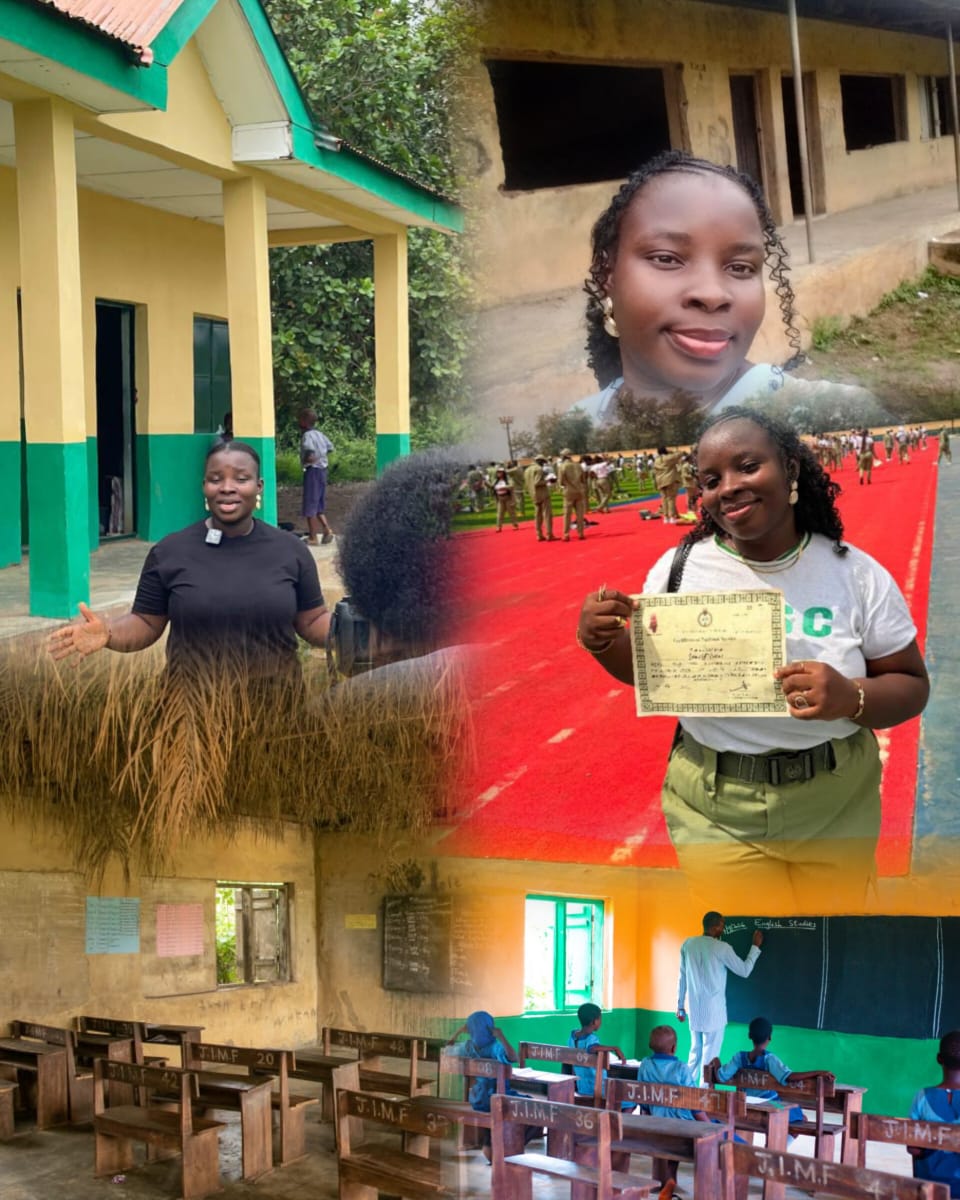
By Ayo Arowojolu

At 12, Gift Joshua experienced a loss that could have permanently altered the course of her life. She lost her mother. Nine months later, tragedy struck again. Her father died.
Within less than a year, the young girl had become an orphan, forced to confront a reality no child should have to face—growing up without the two people she expected would guide her through childhood, adolescence and adulthood.
Fourteen years later, however, Gift Joshua is telling a very different story. It is a story not defined by orphanhood, deprivation or disappointment, but by resilience, compassion, sacrifice, leadership and an extraordinary commitment to the lives of others.
At 27, the Biochemistry graduate of University of Ilorin has demonstrated during her National Youth Service Corps(NYSC) year that nation-building is not always about occupying a powerful office or commanding a large institution.
Sometimes, it begins with seeing something that is wrong and refusing to walk past it. For Gift, that moment came in a sleepy rural community in Ogun State. When Gift left home in July 2025 for the NYSC Orientation Camp in Ogun State, she had already made up her mind that her service year would be different. She wanted to make an impact.
But when she was eventually posted to Seriki-Sotayo, a developing rural community, her first reaction was disappointment. She had hoped to serve in a city. Instead, she found herself in an environment far removed from the urban setting she had imagined.
But rather than spend the year counting the days to her Passing Out Parade, she decided to embrace her posting. “I decided to embrace the community and make the most of my time there,” she recalled.
That decision would eventually change the lives of more than 130 children.
During her orientation camp, Gift had undergone a three-day training on the Sustainable Development Goals (SDGs), including how corps members could initiate community development projects.
The training planted an idea in her mind.
When she resumed at her Place of Primary Assignment, McPherson University, she began looking around the community—not merely as a corps member fulfilling an obligatory national assignment, but as someone searching for problems she could solve. She joined the SDG CDS group and volunteered as its Outreach Chairperson. It was a position that required her to design and plan programmes aimed at improving people’s lives.

Among the initiatives she participated in were a “Pad a Girl” programme for secondary school students, a nutrition and health education campaign at a market square, and career and life-planning sessions for primary and secondary school pupils. But one particular discovery would take her intervention to another level.
One day, while travelling to work, Gift noticed a school with a very large compound.
What caught her attention was not initially the pupils, but what they were doing. Children were outside cutting grass. Behind them stood school buildings whose condition immediately troubled her. She could have continued her journey. After all, she was a corps member. Her primary assignment was elsewhere. Her service year would eventually end. But she couldn’t ignore what she had seen.
The following day, she returned with her friend and fellow corps member, Nurse Modupe. Together, they went into the school, inspected the facilities and spoke with the headteacher. What Gift saw confirmed her fears. The children were learning in an environment that desperately needed attention. And she decided something had to be done.
She mobilised other corps members and began discussing how they could attract assistance for the school. The plan was to write organisations and seek support for the renovation.
Then, in March 2026, an unexpected opportunity arrived. A friend sent Gift an application link to the NYSC Impact Challenge organised by Naijasolve, a programme designed to support community development projects initiated by corps members. Gift applied. Out of several applicants, her proposal stood out. She was selected. The reward was substantial: ₦1.8 million to renovate Anglican Primary School, Seriki-Sotayo, Ogun State.
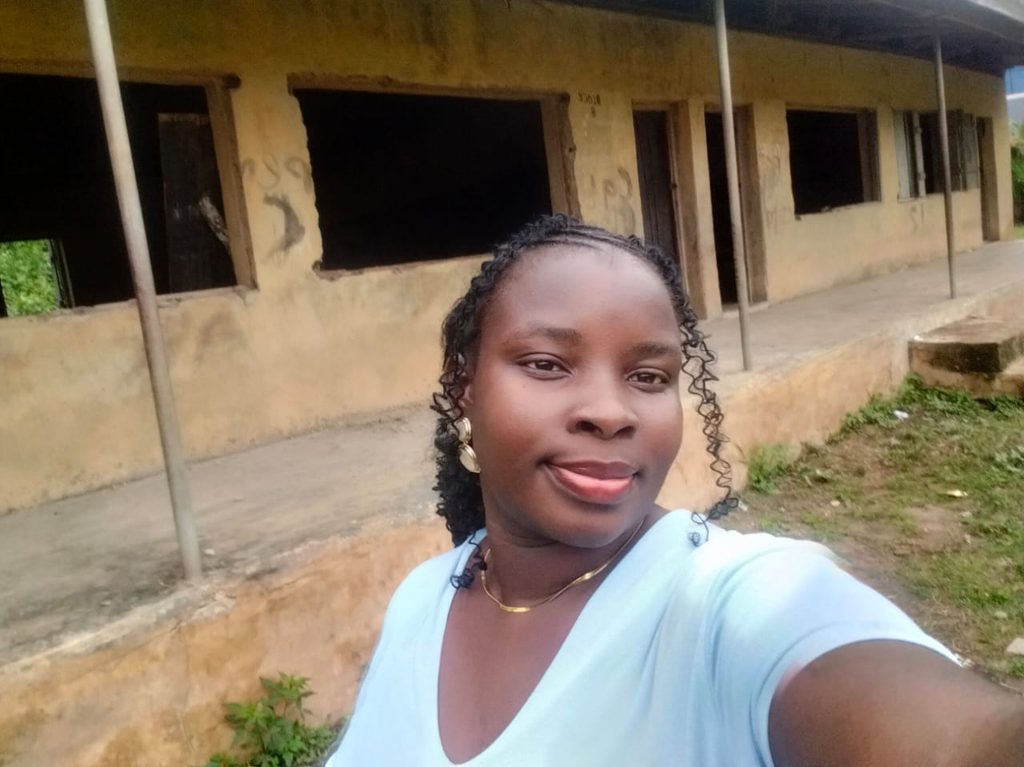
What had started as an observation on her way to work was becoming a full-fledged community development project.
But the funding came with conditions. The money was to be disbursed in three milestones. And because the funds were released only a few days before her Passing Out Parade, Gift faced another choice. She could leave with her colleagues, return home and begin the next chapter of her life. Or she could stay behind and complete the work. She chose the latter.
The Corp Member Who Refused to Go Home
While most of her colleagues had completed their service and departed, Gift remained behind at the corps members’ lodge. For almost two months after her Passing Out Parade, she continued supervising the project. The decision came at a personal cost.
She had already completed her official national service. There was no longer a statutory obligation compelling her to remain in the community. She stayed because she had made a commitment. And she wanted to see it through.
By the last week of August 2026, the transformation of Anglican Primary School, Seriki-Sotayo, was completed. The intervention included the repair and installation of windows and doors, repairs to ceilings in some classroom blocks and painting of the school buildings.
The result was more than a physical facelift. For the more than 130 pupils who use the school, it represented something deeper—the feeling that somebody cared enough about their education to do something. “Rain Will No Longer Disturb Our Learning”
During one of her visits to supervise the work, Gift witnessed perhaps the most rewarding moment of the entire project. The pupils saw the installation of new windows. They were excited. For them, the improvement was not an abstract development project. It was personal. They understood that when the windows were fixed, rain would no longer disrupt their lessons. They saw a more beautiful and conducive environment emerging around them.
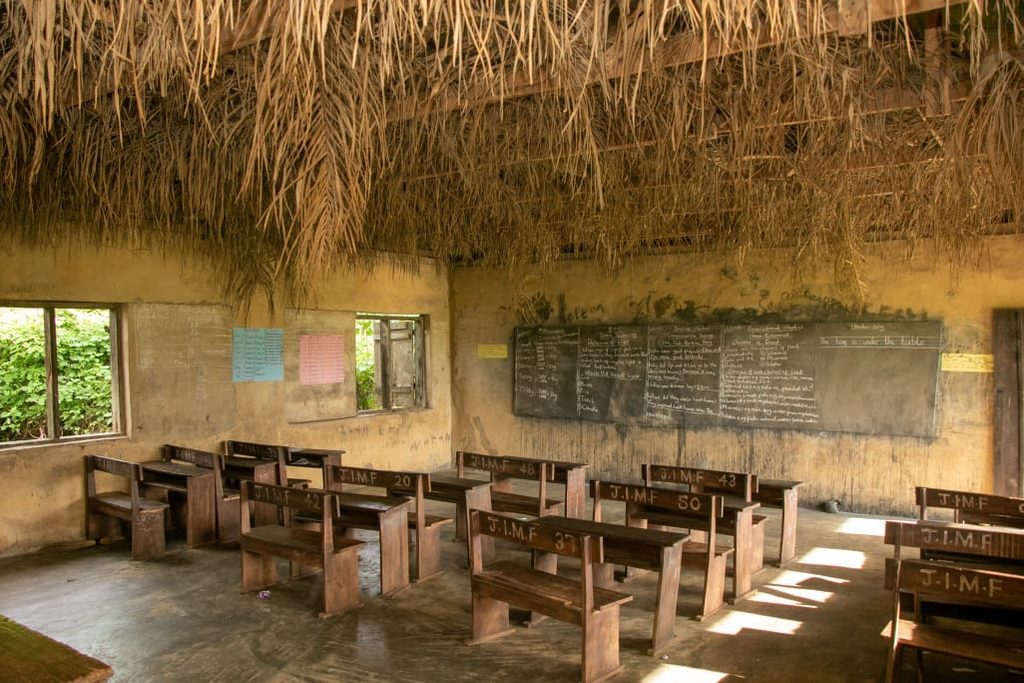
Gift understood that she had achieved something much bigger than renovating walls, windows and ceilings. She had given children a renewed sense of dignity.
An Orphan Who Understands the Power of Hope
Perhaps the deeper significance of Gift’s intervention lies in her own childhood story. She knows what it means to face difficult circumstances. She knows what it means to lose the people who should have been there to guide you. She also knows what it means for somebody else to step forward. After losing her parents, her aunt and uncle took her in and helped raise her.
Gift says their support played a significant role in shaping the woman she became.
That experience appears to have influenced her philosophy of life.
She has always been drawn to helping people and has a particular dislike for injustice.
Her desire to make a difference also explains why she initially wanted to study Medicine.
Although she did not gain admission to study Medicine, she studied Biochemistry and now hopes to further her education in Nutrition and Dietetics.
Her ambition, however, has always extended beyond academic qualifications.
In January 2026, she wrote The Girl Who Almost Gave Up, a short storybook for children and teenagers built around hope, faith and transformation. It was written to encourage young people going through difficult circumstances and remind them that their lives have meaning and purpose. Her life appears to be an extension of the same message.
Beyond Renovation: Fighting for the Future
Gift’s concern for the school did not stop with its physical condition. Her interaction with the community exposed her to deeper social challenges. She discovered that some teenage girls were dropping out of school because of early pregnancies, while some boys were gradually losing interest in education because of negative influences.

Consequently, she sees the school renovation as only one part of a much larger intervention.
For her, improving the physical learning environment is also about sending a message to the community. Education matters.
Children deserve environments in which they can learn with dignity.
And society must be prepared to invest in the children who will eventually inherit it.
“When we give children a conducive environment to learn, we are not only improving their present experience; we are investing in the kind of individuals, communities and nation we hope to build tomorrow,” she said. That philosophy captures the essence of her intervention.
Leadership Without a Title
There is another lesson in Gift Joshua’s story.
She did not hold a political office.
She was not a government official.
She was not a wealthy philanthropist with millions of naira at her disposal. She was a 27-year-old NYSC member who saw a problem and decided to act. She mobilised colleagues. She identified an opportunity. She submitted a proposal. She secured funding. She supervised implementation. She remained in the community after her official service had ended. And she stayed until the job was completed.
That is leadership stripped of titles and privileges. It is leadership demonstrated through initiative, sacrifice, accountability and service.
From Seriki-Sotayo to the Nation
Gift’s story raises an important question about the philosophy behind the National Youth Service Corps itself. The NYSC was established to promote national integration and encourage young Nigerians to contribute to the development of communities outside their immediate environments. For many corps members, service may understandably become a countdown to the Passing Out Parade.
However, for Gift Joshua, it became an opportunity to ask a more fundamental question: “What can I leave behind?” Her answer is now visible in Seriki-Sotayo. She has left behind renovated classrooms, repaired windows and doors, improved learning conditions and, perhaps most importantly, a story that hundreds of children will remember long after she has left.
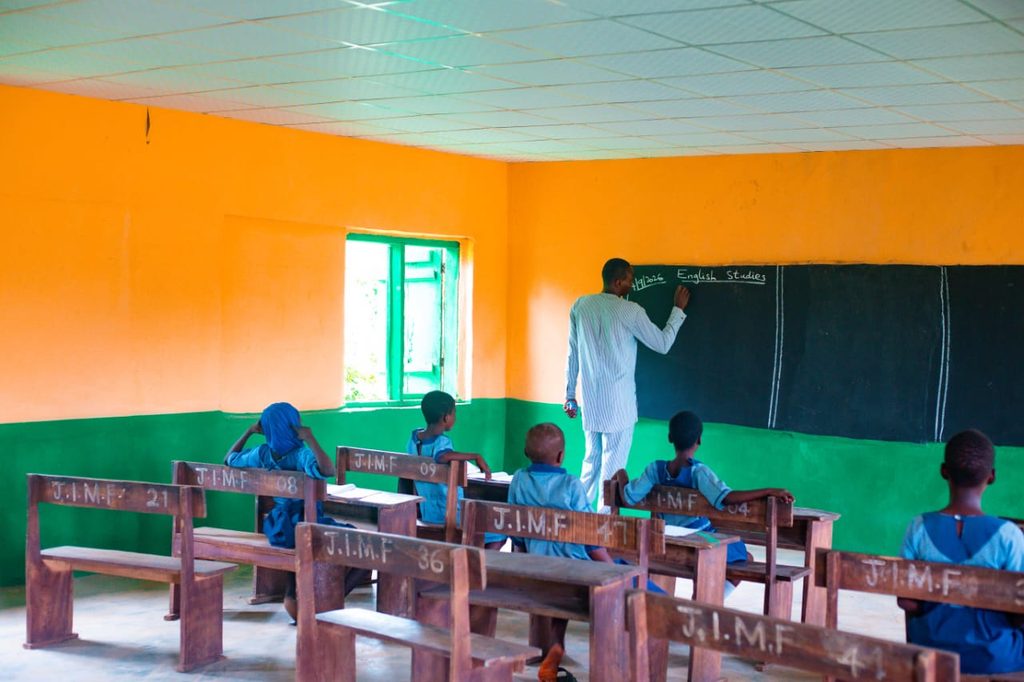
For those pupils, she will not simply be remembered as another corps member who came and went. She will be remembered as the young woman who saw their school, saw their challenges and cared enough to do something.
A Case for Recognition
At a time when public discourse about young Nigerians often focuses on unemployment, migration, social media culture and the search for personal survival, the story of Gift Joshua offers another narrative.
It is the story of a young Nigerian who chose service over convenience, responsibility over indifference and impact over recognition. Her personal journey—from losing both parents as a child to becoming an advocate for children; from missing out on her dream of studying Medicine to pursuing a career focused on improving lives; from arriving reluctantly in a rural community to becoming one of its most impactful visitors—is itself a powerful testament to resilience.
Her NYSC intervention deserves to be documented, celebrated and considered for appropriate recognition because it represents precisely the kind of youth leadership that nation-building requires.
Gift does not describe herself as extraordinary. She attributes the success of the project to God. But the facts tell their own story. A young orphan who could have chosen to focus solely on overcoming her own circumstances chose instead to help children she had never met before.
A corps member who could have treated her rural posting as an inconvenience chose to embrace it. A young woman who had every reason to leave when her official service ended chose to stay. And a school that she could simply have walked past is now standing as a monument to what one determined young Nigerian can achieve when compassion is converted into action.
Gift Joshua came to Seriki-Sotayo as a corps member. She left behind a legacy. And for more than 130 children, the woman who arrived as a stranger may have become something far more enduring: a reminder that somebody cared enough to make a difference.
NB: Gift Joshua can be reached via her phone contact on 07065843640