



























































Concerns are mounting over what observers describe as a long-standing imbalance in the distribution of political offices within Ado Odo/Ota Local Government Area of Ogun State, with stakeholders calling for urgent steps to ensure fair representation.

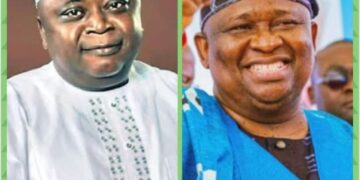
More than two decades after, the people of Ado Odo are seeking inclusion in the Ogun West power equation in particular the upcoming Senatorial Election in the District which is presently being held by Distinguished Senator Solomon Adeola, popular known as Yayi.
A review of political appointments and elective positions from 1999 to 2026 indicates that key offices have largely been dominated by the Ota and Igbesa blocs, leaving Ado Odo with significantly limited representation.
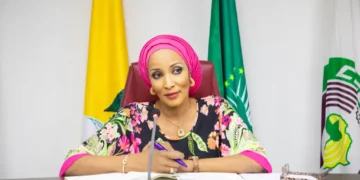
At the highest level, the current Deputy Governor of Ogun State, Engr. Noimot Salako-Oyedele, hails from Ota, reinforcing what analysts see as the dominance of that axis in top government positions.
The trend is also evident in the National Assembly. Since the return to democratic rule in 1999, the Ogun West senatorial seat has not been occupied by any indigene of Ado Odo. Former senators, including Akin Babalola Odunsi (2011–2015) and Gbolahan Dada (2015–2019), are both from Ota.
Representation in the House of Representatives shows a slightly broader spread but still reflects disparities. While Ota and Igbesa have produced multiple representatives over the years, Ado Odo’s presence has been limited to a single term held by Hon. Tunde Ogunola between 2011 and 2015.
At the state executive level, appointments such as Commissioners have consistently gone to individuals from Ota and Igbesa across successive Administrations, from the era of Chief Olusegun Osoba to the current government of Prince Dapo Abiodun.
Similarly, leadership at the grassroots level mirrors the same pattern. Since 1999, the chairmanship of Ado Odo/Ota Local Government has been largely controlled by Ota, with Igbesa also featuring prominently. Ado Odo, however, has produced only one chairman within the same period.
Further analysis of federal and statutory appointments—including positions in agencies such as the Federal Housing Authority and the Ogun State Universal Basic Education Board—reveals a similar concentration of beneficiaries from Ota.
Stakeholders argue that this pattern underscores a systemic imbalance that has persisted for over two decades.
“This is not just about politics; it is about fairness and inclusion,” a political observer in the area noted. “Ado Odo is a major bloc with historical significance, a large population, and strong political structures, yet it has remained largely excluded from key positions.”
The growing agitation, according to analysts, is now coalescing around a demand for the Ado Odo axis to produce the next senator representing Ogun West.
Proponents of the demand insist that the call is rooted in equity rather than sentiment, pointing to precedents where collective advocacy has reshaped political arrangements in the state.
They cite the Ogun West political movement, which successfully pushed for power shifts through sustained calls for fairness, as an example of what coordinated action can achieve.
Observers say the unfolding discourse signals a broader conversation about inclusiveness and balanced representation within the local government.
As political activities gradually build ahead of future elections, many believe the demand for equitable power sharing in Ado Odo/Ota may become a defining issue.
For residents and stakeholders in Ado Odo, the message is clear: after more than two decades on the margins, the time for inclusion, they say, is now!