
















































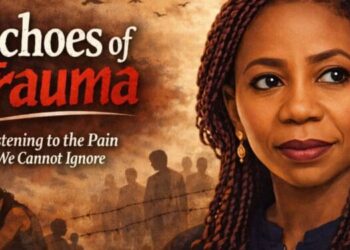
Echoes of Trauma: When you no longer know what you want
One of the strangest things that can happen to a person is to become so good at living the life...
Read moreOne of the strangest things that can happen to a person is to become so good at living the life...
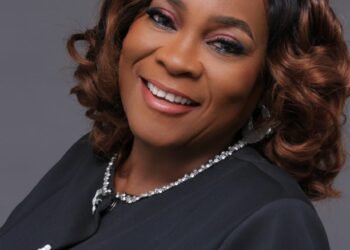
Read moreA Feature Profile & Interview from The Podium International Magazine Profile & Background Adeola Falomo is the Creative Director, Event Stylist, and Founder of Courage Events. She is an alumna of Methodist Girls High School (Yaba) and a Chartered Insurer with the Chartered Institute of Insurance (London). She holds an MBA in Marketing and a degree in Business Management from the European Business School (Luxembourg). Before her foray into Event Styling, she worked at LASACO Assurance Plc. for 22 years before retiring as an Assistant General Manager in the Public Sector. Her transition from the corporate world into the Events industry was very seamless. Her entry was a breath of fresh air, and her impact has been incomparable. Her creativity, flair for excellence, and penchant for design led her to set up Courage Enterprise (registered in 1996), which later transformed into Courage Designs and Events (incorporated in 2010). Today, it is an industry leader in event styling and organisation and continues to set the pace in the Nigerian events industry. She has always been an event stylist who does things differently. Her work over the years shows an event professional unwaveringly dedicated to excellence in her craft, always leading the way in creating and spotting the newest event trends. This continually strengthens her expertise as an industry leader and inspires many other professionals in the sector. She has received numerous awards and commendations for excellence in service delivery over the years, including The Pacesetter Award by Motivational Ventures. She has also participated in several conferences and workshops in the Insurance and Event industries, both locally and internationally, dedicated to continually perfecting her craft. Beyond event styling, she is also an encourager and mentor to many. Her NGO, Courage-A-Hand, has worked tirelessly to help young men and women flourish in their chosen careers by providing mentorship and advice in partnership with other platforms. Celebration & Milestone Mrs Falomo is an affable, amiable, hardworking, unassuming, and dedicated business executive who has proven her mettle as a resourceful, focused professional and creative entrepreneur. Family members, business associates, clients, and friends gathered on Sunday, September 20, 2026, to celebrate her 63rd birthday. The occasion also marked 17 years since she left paid employment and 23 years of successful entrepreneurship following her voluntary resignation as Assistant General Manager at LASACO. At the gathering, various speakers extolled the virtues of Mrs Falomo and thanked God for her life. Speakers described her in superlative terms that reinforced the public perception of her as one of Nigeria’s frontline creative entrepreneurs—enigmatic, kind, and supportive. Professional Affiliations Mrs Falomo is affiliated with the following professional associations in various capacities: Lifetime member and former Social Secretary, Professional Insurance Association. Member, Association of Professional Party Organisers and Events Managers of Nigeria (APPOEMN). Member, Lagos Chamber of Commerce and Industry (LCCI). Member, Rental Professionals Society of Nigeria (RPSN). Associate member, Chartered Insurance Institute of Nigeria (CIIN). Life member and former Social Secretary, Professional Insurance Ladies Association (PILA). Member, Party Managers Association of Nigeria (PAMAN). ...
Read moreFear can weaken faith, produce qdoubt, distort human thinking and prevent people from taking necessary action, Ven. Olukunle Aremu Fajobi...
Read moreBy Max Amuchie | The Sunday Stew On 7 June 2026, this column unveiled the Decoupling Sovereignty Index (DSI) as the quantitative extension of the Trinity of Sovereignty Decay (TSD) theory, formerly known as the Trinity of State Decay. It is a measurement instrument designed to track the degree to which a state's formal authority has separated from its practical, lived reality on the ground. But the index measures a condition with a human face—and that face belongs to a peculiar kind of disappearance: one that does not require a person to die. A person can remain alive, remain within the borders of a country, retain a name, a nationality and perhaps even a national identity document, and yet become progressively invisible to the institutions that are supposed to make citizenship meaningful. The person has not left the country. The state has not officially ceased to exist. The constitution may still be in force, parliament—or, in the case of Nigeria, the State Assembly—may still sit, courts may still open their doors, police stations may still bear the name of the state, ministries may still issue statements, and elections may still be conducted. And yet, somewhere within the territory, sovereignty has begun to thin out. The question is not simply whether a state exists. The deeper question is where, how, and to what degree sovereignty reaches the individual. What happens when the state still claims a person but can no longer reliably see, protect, serve or represent them? Perhaps the most concise answer is that they begin to become nobody. Not nobody in the philosophical sense of non-existence. Nobody in the institutional sense. The DSI Begins With the Zone DSI does not begin with the country as its unit of observation. It begins with the zone—the sub-national space in which sovereignty is actually experienced. A country may remain formally sovereign while sovereignty is experienced very differently across its territory. A national government can exercise effective authority in one part and encounter competing authority, weak institutional reach or negotiated compliance in another. The country provides the sovereign frame; the zone provides the analytical field. The question, therefore, is not simply whether the state exists, but where—and for whom—it actually exists. That distinction is essential. An observation about the Port-au-Prince Metropolitan Zone is not a statement that Haiti as a whole has ceased to function as a sovereign state. An observation about Catatumbo is not a statement about Colombia in its entirety, and an observation about Zamfara is not a description of Nigeria as a whole. The comparative question is therefore not "Which country has failed?" It is this: what happens to sovereignty inside particular zones when the state's formal territorial claim becomes detached from its effective institutional reach? Three Zones, Three Continents Consider the Port-au-Prince Metropolitan Zone in Haiti, the Catatumbo Zone in Colombia and the Zamfara Zone in Nigeria. They differ in geography, history, political systems and the forms of insecurity they have experienced. They are not three versions of the same crisis. They are three configurations of decoupling. Port-au-Prince: territorial sovereignty contested. Haiti remains a sovereign state, with international recognition, constitutional institutions and territorial claims. But in parts of the metropolitan area, armed groups have acquired an extraordinary capacity to determine how people move, trade, work and access essential services. When an armed group controls a road, decides who may pass, extracts revenue or determines which population can remain in a neighbourhood, it inserts itself between the state and the citizen. The resident's question becomes brutally practical: whose authority determines whether I can move, trade, work or remain here? That is a DSI question. The person's nationality has not changed, but the lived geography of sovereignty may have. Catatumbo: sovereignty in competition. In Colombia's Norte de Santander, the state has not simply disappeared. Armed organisations have competed for territorial and social control alongside formal institutions, in a region shaped by armed conflict, illicit economies and displacement. The escalation of violence in early 2025 produced mass displacement and severe humanitarian consequences. What matters for DSI is that different forms of authority operate within the same space. The state retains legal sovereignty, an armed organisation may control movement in a locality, an illicit economy may determine livelihoods, and a community may build its own mechanisms of protection. The citizen lives within overlapping systems of authority. This is not the disappearance of sovereignty but the fragmentation of its lived expression. Zamfara: the negotiated space. In Zamfara, the state remains present: institutions, security agencies and political authority are all formally intact. Yet persistent bandit violence, displacement and attacks on rural communities have created environments in which survival can require strategies beyond ordinary reliance on formal institutions. In some instances, communities have negotiated locally with armed groups. The DSI question is not whether such negotiations are legitimate or lawful. It is why a community reaches the point of feeling compelled to negotiate its security outside the state's formal architecture. The community may not have rejected the state. It may simply have found that survival has acquired another institutional address. And once survival acquires another address, sovereignty has begun to move. These are not a league table of state failure, and DSI is not making one. Nor should every alternative institution be treated as the same phenomenon. A community organisation providing emergency support is not analytically identical to an armed group controlling territory. An informal market is not criminal governance. A negotiated local arrangement is not automatically the displacement of state authority. ...
Read moreMisleading Interpretation of Electoral Act Judgment Should Be Disregarded The Peoples Democratic Party candidate for Ogun Centre Senatorial election, Senator...
Read more

Boiling Point is an online newspaper that has bias for reporting items of news that principally cut across politics, economy, general interests and public finance management/administration. Boiling Point holds dearly the journalism tenets of objectivity, fairness, balance and truth in reporting the news.